Created 2014:
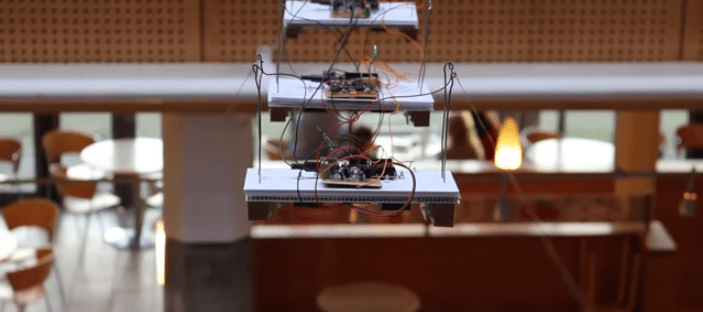
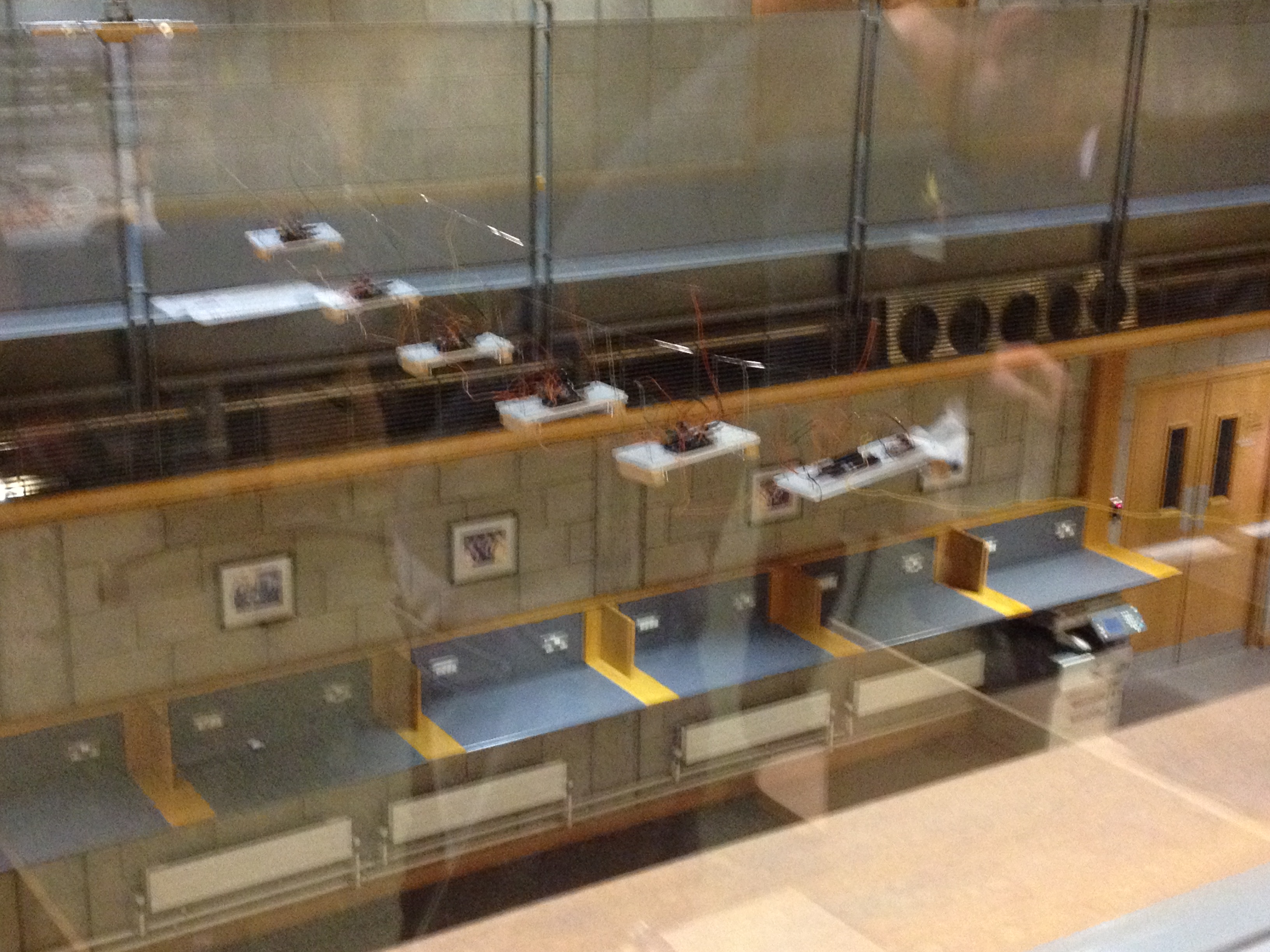
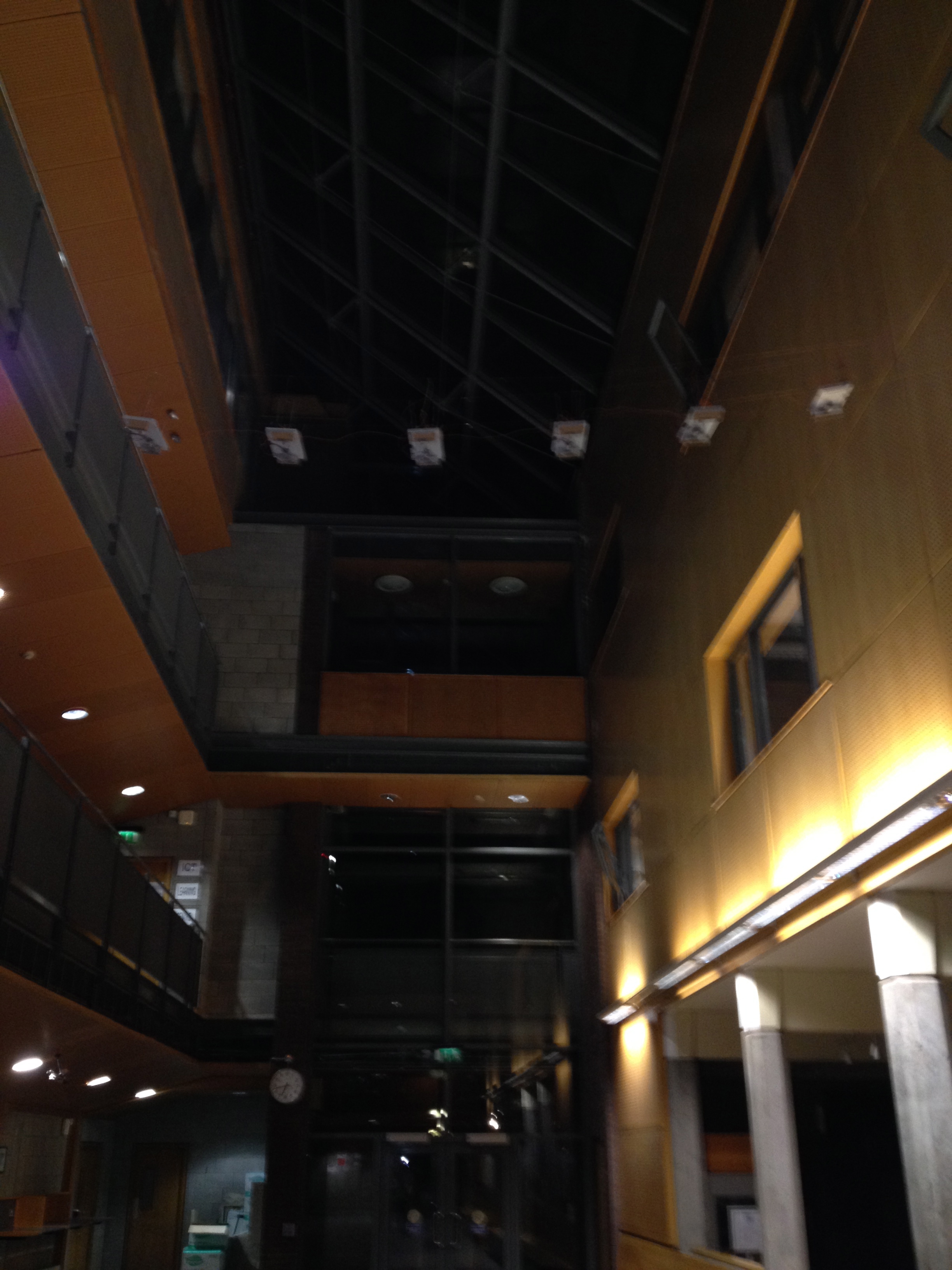
Motus is one of the two installations that makes up the exhibition ‘If this then that or that?’ Created by the fourth year students of Music Media and Performance Technology at the University of Limerick, Motus observes the development of simple agents that registers its real time environment activity and provides a representation of that data with specific sonic outcomes. The hallway of the Computer Science Building (CSIS) in UL, exhibits varying types of activity levels every day. It can often turn from hectic happenings one moment to a serene environment in another. But what of this energy that populates the CSIS? One of the aims of the Motus installation is to take this ambience that people create in the hallway and recreate it sonically. The installation attempts to accurately replicate atmosphere of its previous 3 hours 9 minutes. An IR sensor logs the activity level of the people passing. Therefore, humans, perhaps unknowingly, are the driving force behind the piece. Once this data is recorded, it is reinterpreted using a Arduino Uno microcontrollers which generate an output through solenoids. Through the power of sound, the piece attempts make reconnections back to human activities.
Installed
Testing Circuit
Floor View
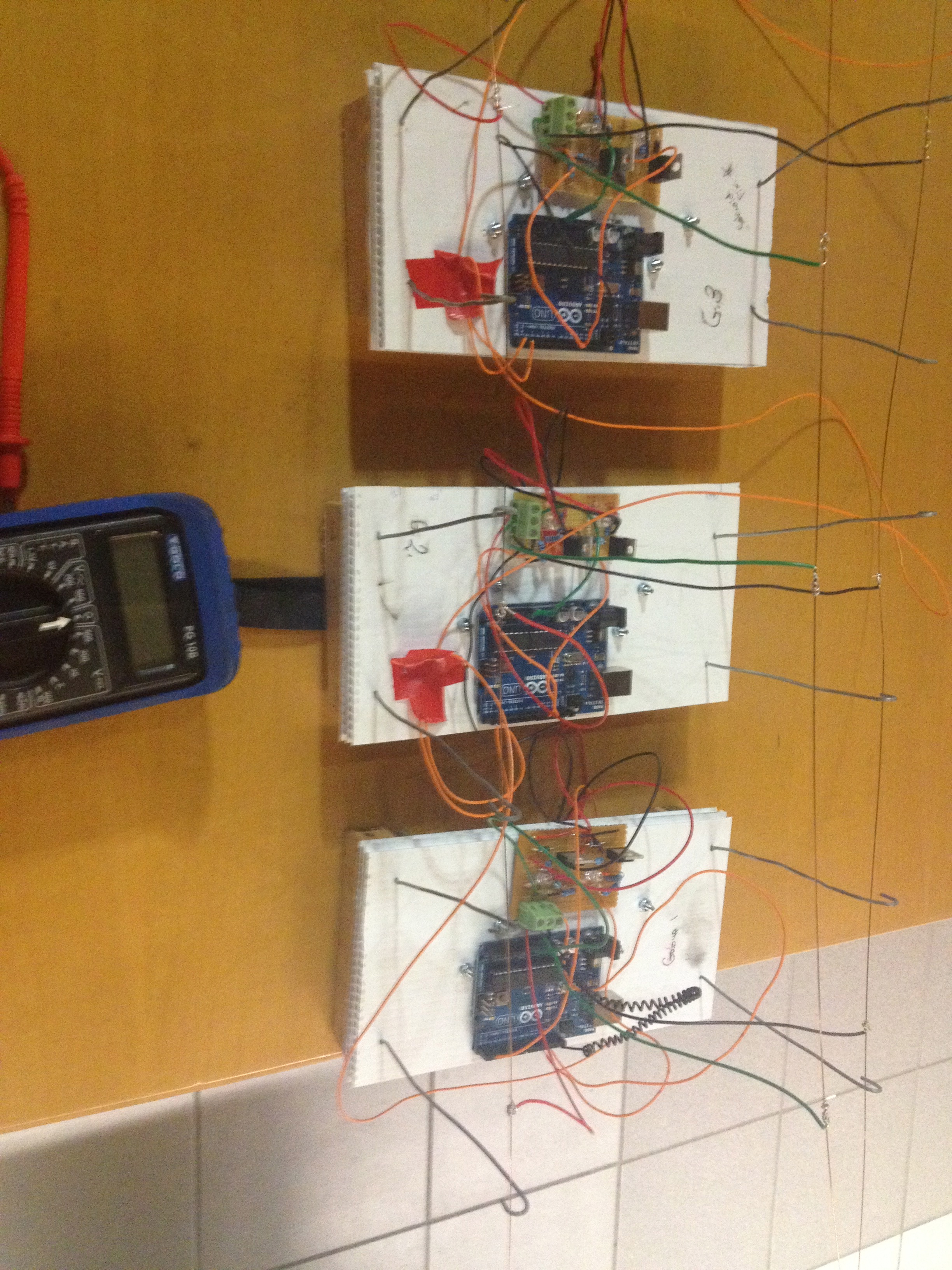
The simple circuit was created in order to safely provide power to each solenoid . This circuit was to be replicated a further 5 times for each agent. The circuit is made up of two solenoids (one for the master), two LEDs, two 10k Ohms resistors, a 220 Ohms resistor, a 150 Ohms resistor, 47k Ohms resistor, a Darlington Driver and an N- Channel MOSFET.
The aim was to create an agent that could be both aesthetically pleasing and also sported a simplistic appearance. Considerations when making the design include build effectiveness, portability and cost efficiency. Sketches were drawn up before collecting materials to build. Corrugated plastic was used as the flat based to hold the circuit board/Arduino one-side and Solenoids, blocks and Glockenspiel keys on the other.
Explanation Video:
(credit to fellow student Stuart Duffy who created the above video)
My Role:
Roles were primarily split into four: Designers, Circuitry, Input Code and Rule implementation. I was heavily involved in the programming. This involved me writing code for our specific Arduino Slave (the 50 unique rules reactive to activity conditions) and also contributing to the Master Arduino that will dictate how it stores crowd activity, how long and when it will play etc. This was done using Serial Communication. I also did a large amount of debugging. This involved creating dummy prototypes to test my groups Arduino Rules and also test all the slaves at once sending them false data from Pure Data.
I have a paper written which thoroughly describes the programming, the design, circuitry and concept of our project, Feel free to contact me.
 Stuart Creates