
Tag: Audio Compositions

Max MSP Algorithmic Processes
Created 2014:
For own final assessment in Digital Media Software and Systems 4 in 2013, we were required to build a music performance system in Max MSP that illustrates the algorithmic processes covered in this course. We had to perform with this system in a live context, in groups of five people. Each one of use would focus on different algorithmic processes within our patch. The video below is just a demonstration of my part. Others focused on drums samples, vocoders, synth etc. and we would then play together simultaneously. The algorithmic processes which we studied for this involved:
• random, drunk, and urn
• weighted distribution
• Markov chain
• fractal or self-similar process
• Logistics Map
• other chaotic process (Hénon, etc.)
The patch demonstrated below features Markov Chain and random, drunk, and urn. Our aim as a group was to manipulate the stochastic behaviour of the algorithms in such a way that is was still pleasing i.e. or notes were random but only within specific scales in order to sound pleasing.
Demonstration:
(I will be rerecording a demo of this with internal recording to omit the noise interference,)
Digital Performance System
Created 2013:
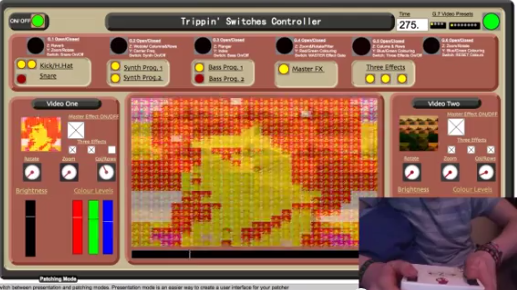
The project sees Arduino/Electronics, CSound & Jitter come together creating an audiovisual system to perform with. It enables live video manipulation and live control of CSound synthesis. We created a simple hand held box that contained two buttons, an accelerometer and an Arduino microcontroller. This gave us control over what was heard and seen i.e. the buttons could toggle through different states while tilting the boxed changed specific values in each selected state. We used referenced video loops to manipulate the visuals in Max MSP, we, however, created all the audio components ourselves within CSound through coding. This included the bass, kick and snare you can hear in the demo. How these sounds are triggered is determined within Max MSP based on the gating system I created to filter signals from the Arduino. The videos below give further explanation and you can click here to read our NIME style paper.
Our end product had the ability to:
- Send sensor data from Arduino into Max MSP.
- Enable the manipulation and control of audio and video using sensors through mapping techniques.
- Run CSound in real-time via the Max MSP csound~ object. Audio material for CSOUND:
- Manipulate video loops within our Jitter patch.
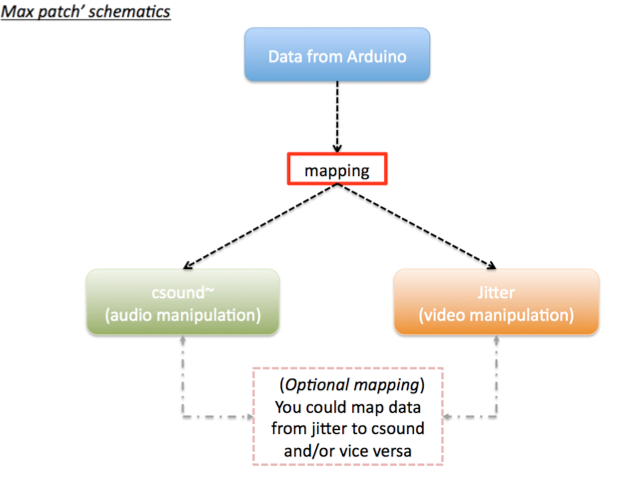
Schematic Route
Explanation and Demonstration:
Screenshots:

Max Patch 1

Max Patch 2

Max Patch 4
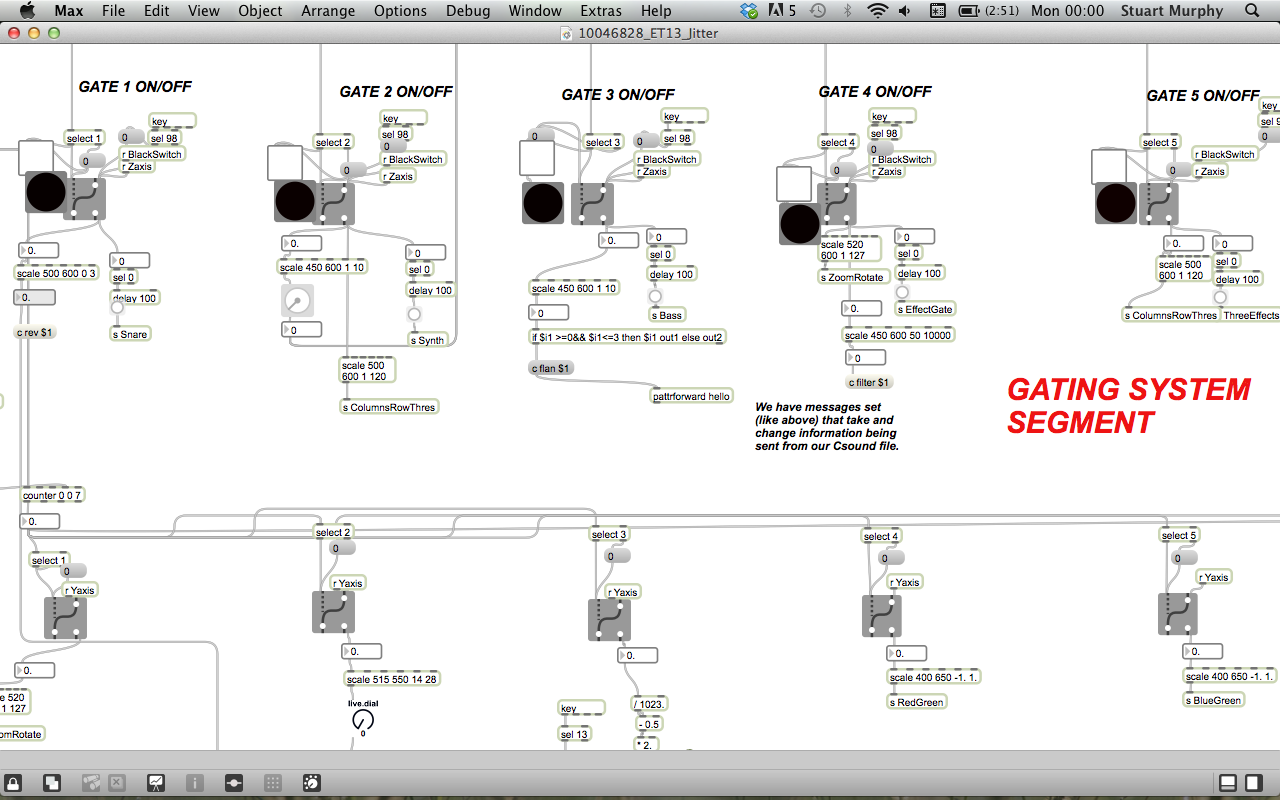
Max Patch 3

CSound Segment
30 Minute Radio Show: ‘The Mixxed Bag’
Created 2010:
In 2010 myself and two other colleagues created our very own 30 minute radio show. We performed all tasks our ourselves. Duties involved:
- Good knowledge of broadcasting and recording equipment.
- Be familiarized with the broadcasting studio and desk.
- Preform vox pops and interviews to incorporate into our shows.
- Having regular meetings to ensure that we can agree on material that we think would be most entertaining for our target audience.
- Up to date knowledge on news and the music scene.
- Editing skills using audio software such as Cubase, Audacity or Adobe Audition.
My primary task was the editing. I worked mainly with Adobe Audition and Cubase to piece our show together.I had to decide the best parts from our recordings, edit together with smooth transitions and keep the show under 30 minutes. Additionally, I also performed vox pops, interviews, gave creative inputs and even had a small festival review on the show.
This was the final product of our show:

Mario’s Underworld remix using Logic Pro
Created 2011:
We were given a short MIDI file of Mario’s Underworld theme and were to perform our own remix. It was an opportunity for us to practice tempo change, effects, transposing, pen tools, MIDI keyboards and other various tools affiliated with Logic Pro. We were allowed our own creative input as long as the main theme was not lost on the listener. This was one of my earlier projects using Logic Pro and have since become far more familiar with its operations and my ability in using the software is greater.
This was the outcome of my project:

Logic Pro Screenshot
 Stuart Creates